
Projects




Unknown Germany Block Scree Slopes – A model system for research on biodiversity and knowledge transfer
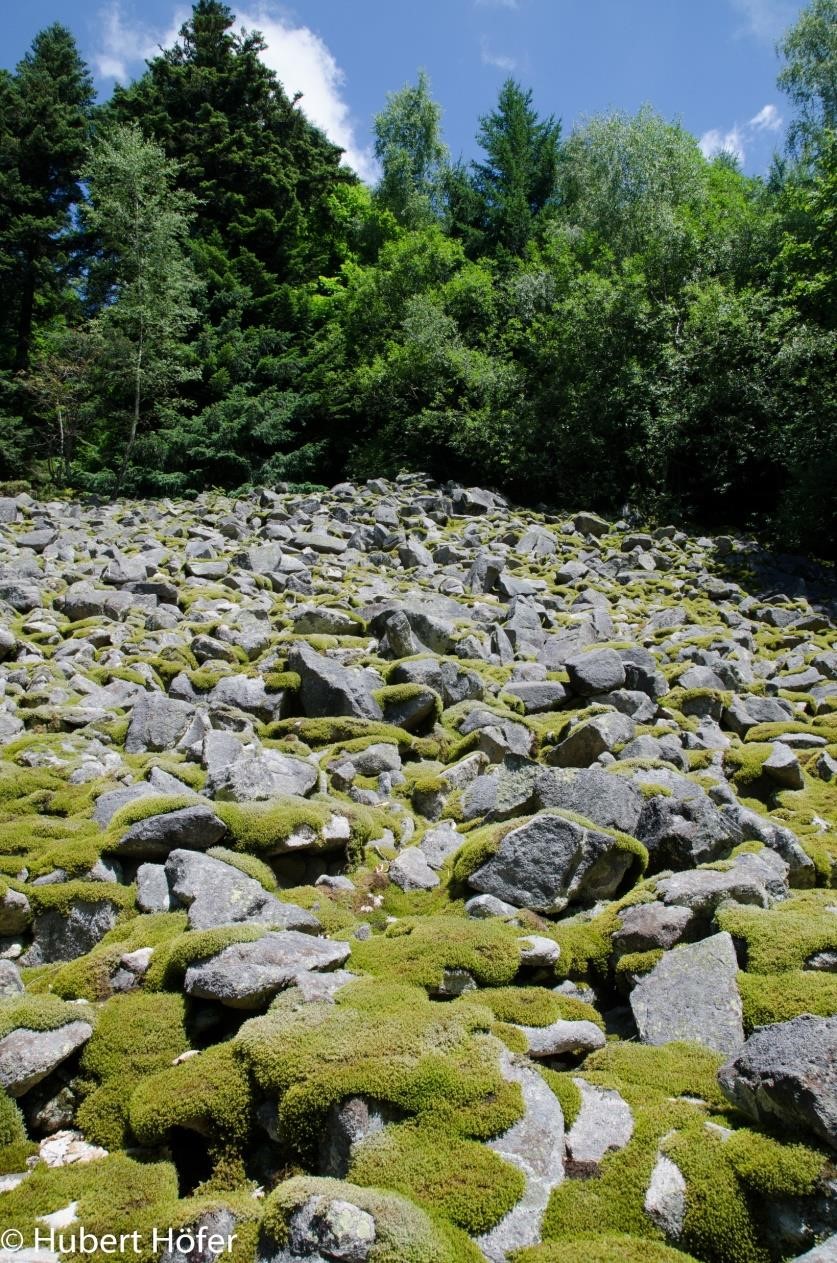
They originate from in-situ erosion of rocks during the Pleistocene, and are forest free, mostly undisturbed by men for more than 10.000 years. They comprise extreme environmental conditions as they are often very steep and only sparsely vegetated. The temperature within the screes shows extreme contrasts from cold to warm. In Central German Uplands screes are cold refuges. In consequence, they are habitats for very specialized species.
For several years, screes are in the research focus of the SMNK in cooperation with working groups from other museums and the Black Forest National Park. Thus, we have a good base for further research, and we also know that there is much more to discover. Even for the well-known group of spiders unexpected new species records have been made by the SMNK.
Within “Unbekanntes Deutschland” we want to assess the historic and recent habitat characteristics of the screes, and thus their change over time. For present and future, additionally the direct human impact is of our interest as well as the impact of climate change. As screes are compact ecosystems it is possible to assess them in an interdisciplinary approach by sampling flora, fauna and fungi, and by characterizing their habitat structures using classic methods as well as modern approaches. The block scree research approach will also serve as a model for the integration of FAIR data management workflows, from the data curation in our scientific database system Diversity Workbench to the data provision in different portals for research and the public. Special attention will be given to the transfer of research results and knowledge of species and ecosystems to the broad public. We will work on different ways of transmitting knowledge (online, in situ, in the museum).
As such the block scree slopes may serve as a blueprint for “unbekanntes Deutschland”.